Utility assets don’t fail on a schedule. Poles, transformers, cables, and switchgear are spread across entire service territories, aging at different rates depending on load, weather exposure, and decades of accumulated wear. For most of the industry’s history, utilities have managed all of it the same way: fix what breaks, inspect what’s due, and hope the two rarely overlap.
That model is running out of runway. Research from IBM’s work with major utilities found that electric utilities face a growing backlog of aging assets, made worse by incomplete information, fragmented data, and the sheer diversity of asset classes spread across a service territory.¹ Getting a holistic view of grid health isn’t primarily a technology problem anymore. It’s a data problem, and it’s one that compounds every year infrastructure ages without a system built to track it properly.
Why Time-Based Maintenance Is Losing Ground
For decades, utilities have leaned on scheduled inspections and manufacturer-recommended service intervals. It’s a reasonable starting point: replace parts on a calendar, inspect assets on a rotation, and assume that’s close enough to catching problems before they escalate.
The flaw is that it treats every asset of the same type as if it ages identically, regardless of actual operating condition. A transformer running at high load through several hot summers wears differently than one operating well under capacity in a mild climate, yet both often sit on the same inspection schedule. Academic research on smart asset management for electric utilities makes the case for a different approach entirely: using the data utilities already collect, from smart meters to historical maintenance records, to move asset planning from a calendar-driven exercise to a condition-driven one.² The infrastructure to collect this data increasingly exists across most utility territories. The gap has been in connecting it to a maintenance program that can actually act on it in real time.
The Real Bottleneck Isn’t the Sensors
It’s tempting to assume the fix is simply more monitoring hardware, more smart meters, more remote sensors on more assets. But the more common problem utilities run into is that the data they already have, inspection records, work orders, asset age, past repairs, lives scattered across systems that were never built to talk to each other.
A transformer’s maintenance history might sit in one database, its inspection photos in a separate file share, and its load data in a completely different monitoring platform. None of that adds up to a usable picture of that asset’s actual health unless someone manually pulls it all together, and that manual reconciliation is exactly the kind of work that should have been eliminated by digital tools in the first place.
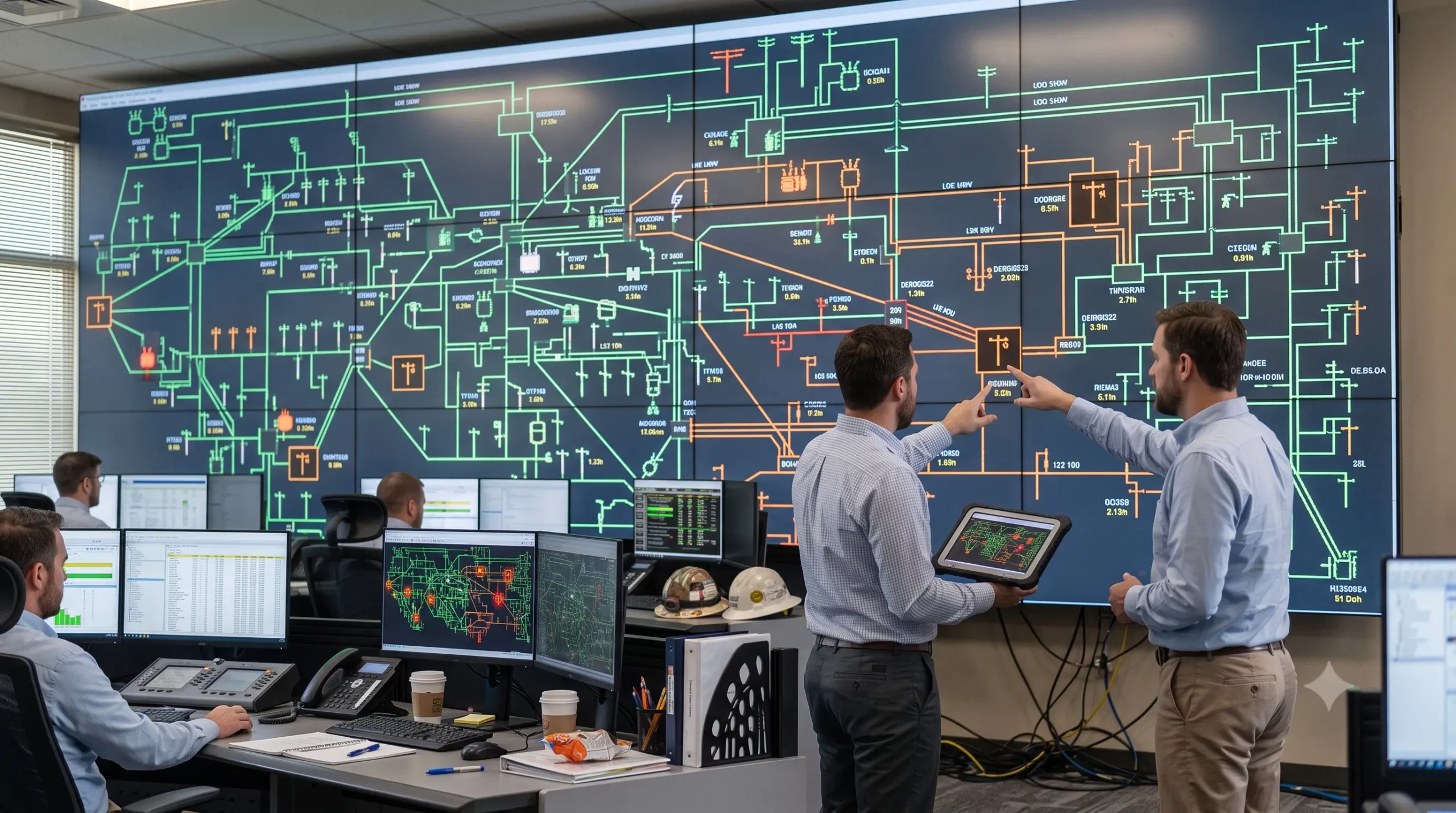
Without a unified view, crews end up making judgment calls in the field with only part of the picture, and planners end up justifying capital investment decisions with data that’s incomplete at best and contradictory at worst. Every disconnected system is another place where a warning sign can get lost before anyone acts on it.
What a Unified View Actually Changes
When inspection history, asset age, repair records, and condition data live in one place, the questions utilities can ask shift entirely. Instead of “when is this transformer due for its next scheduled check,” the question becomes “does this transformer’s actual condition warrant attention sooner than the calendar says.” Instead of reconstructing an asset’s history from three systems before a capital planning meeting, that history is already assembled and ready to reference.
That shift matters most for the assets utilities can least afford to lose track of: substations, critical feeders, and aging infrastructure in territories where a single failure can mean extended outages for thousands of customers. A unified record doesn’t just save time. It closes the exact gap where deferred maintenance turns into an unplanned failure.
Where iMarq Fits
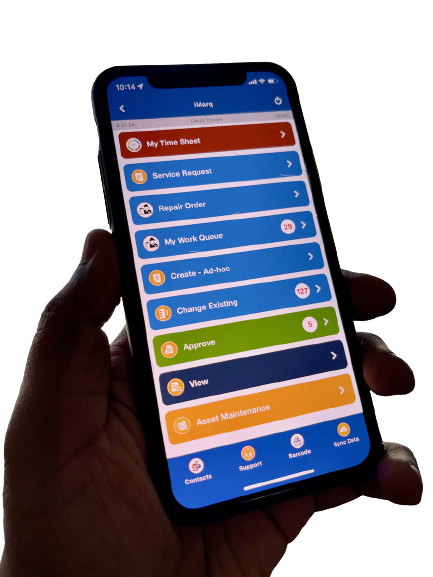
iMarq gives utility maintenance teams one place to log inspections, track asset history, and manage work orders across poles, transformers, substations, and every other fixed and distributed asset in a territory. Every inspection and repair builds a complete, searchable record for each asset, so the question in the field or in a planning meeting is never “where’s that data,” it’s “what does that data tell us.”
Bringing the Grid Into One Picture
Utilities aren’t going to out-build their way past aging infrastructure, and budgets for wholesale replacement rarely keep pace with the rate assets actually age. The utilities that get ahead of this will be the ones that stop trying to manage the grid through disconnected systems and instead connect the maintenance data they’re already generating into a single, usable view. One where a field crew and a planning team are looking at the same asset history, not two different versions of the truth pieced together after the fact.
Request a demo to see how iMarq helps utility teams unify asset data across the grid: https://www.connixt.com/try/
References:
- Chelmis, C., et al. Asset health management using predictive and prescriptive analytics for the electric power grid. IBM Journal of Research and Development. https://ieeexplore.ieee.org/document/7384561/
- Khuntia, S. R., et al. (2017). Smart Asset Management for Electric Utilities: Big Data and Future. arXiv. https://arxiv.org/pdf/1706.09711