
Every facility is, at its core, a portfolio of fixed assets: the building envelope, the HVAC system, the electrical infrastructure, the plumbing that nobody thinks about until it fails. When these systems break down, the disruption rarely stays contained. It touches production schedules, logistics timelines, and in some cases, safety.
The strategic question facing facilities leaders in 2026 is not whether to move from reactive repairs to a proactive maintenance model. Almost everyone agrees that proactive is right. The question is why so few facilities have actually made that shift.
The Ratio That Actually Predicts Cost
Industry benchmarking offers a clear answer to what separates high-performing facilities from the rest. Organizations that maintain a preventive-to-reactive maintenance ratio of 60:40 or better spend 20 to 30% less on total maintenance costs than those that do not. That is a meaningful, measurable gap, and it is driven entirely by which side of the ledger, planned work or emergency response; a facility spends most of its time on.
Yet current data shows more than half of facilities still spend less than half of their maintenance time on scheduled work, with well under a third spending most of their time on preventive tasks. The intent to be proactive is nearly universal. The execution gap is where the cost lives.
Why the Gap Persists
The barriers are not mysterious. Insufficient staffing, scheduling conflicts, and a lack of centralized data are cited consistently as the top obstacles to proactive maintenance. Many facilities, especially smaller or multi-site operations, are still tracking assets through spreadsheets or paper logs. More than four in ten plants report having no centralized maintenance data or work order system at all.
Without a single source of truth for asset history, facilities managers cannot make the case for the resources a preventive program needs. It becomes a cycle: no data to justify investment, no investment to build better data.
The Cost of Staying Reactive
The pattern holds up in research, too. A 2021 study on building HVAC maintenance found that facility teams still operate mostly on corrective maintenance, taking action only after a complaint or a failure, with tight budgets limiting preventive work to the mandatory minimum on critical systems. The same research puts a number on what those costs: faulty, unaddressed equipment operation can drive a 20–30% increase in a building’s total energy consumption. Predictive approaches close to that gap by acting on the data equipment already generates, catching problems early without adding another layer of costly, labor-intensive site inspections.
Where iMarq Fits
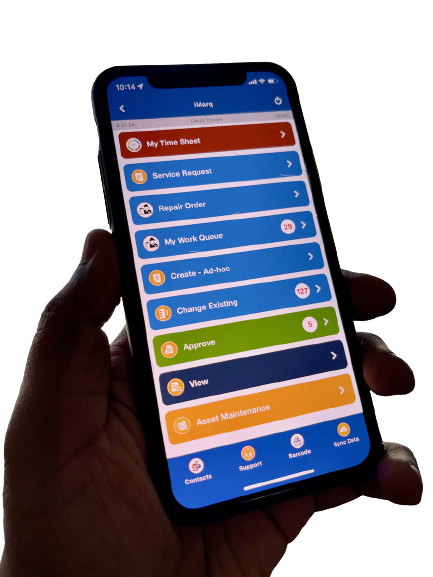
iMarq gives facilities managers precise control over every fixed asset, from HVAC and electrical systems to elevators and life-safety equipment, in one digital platform. Preventive maintenance schedules are set once and run automatically. Every inspection and repair is logged at the point of work, building a complete, exportable history for each asset rather than a folder of disconnected paper records.
That centralized record is what makes the case for a facility’s next investment; it turns “we think preventive maintenance would help” into a documented before-and-after. It is also what protects a building’s long-term value: the roof, the chiller, the electrical panel are all capital assets, and a documented maintenance history extends their working life and protects the investment behind them.
The Standard Being Set
The facilities that get ahead in 2026 are not the ones with the newest buildings. They are the ones that have stopped treating maintenance as a response to what already broke and started treating it as a planned discipline, backed by data that makes the next decision easier than the last one.
Request a demo to see how iMarq helps facilities teams move from reactive to proactive: https://www.connixt.com/try/
References:
- Bouabdallaoui, Y., Lafhaj, Z., Yim, P., Ducoulombier, L., & Bennadji, B. (2021, February 3). Predictive Maintenance in Building Facilities: A Machine Learning-Based Approach. Sensors, 21(4), 1044. https://doi.org/10.3390/s21041044
- Facilities Dive. (2026, February 6). Only 26% of maintenance is preventive: UpKeep survey. Retrieved from https://www.facilitiesdive.com/news/only-26-of-maintenance-is-preventive-upkeep-survey/813208/
- MaintainX. (2025, October 17). 25 Maintenance Stats, Trends, And Insights For 2026. Retrieved from https://www.getmaintainx.com/blog/maintenance-stats-trends-and-insights
- Maintainly. (2026, March 27). Maintenance Stats, Trends & Insights for 2026. Retrieved from https://maintainly.com/articles/maintenance-stats-trends-insights-for-2026
- Keepwisely. (2026, May 19). Government CMMS Facility Maintenance Guide for 2026 Growth Plan. Retrieved from https://keepwisely.com/blog-detail/government-facility-maintenance-optimization-cmms