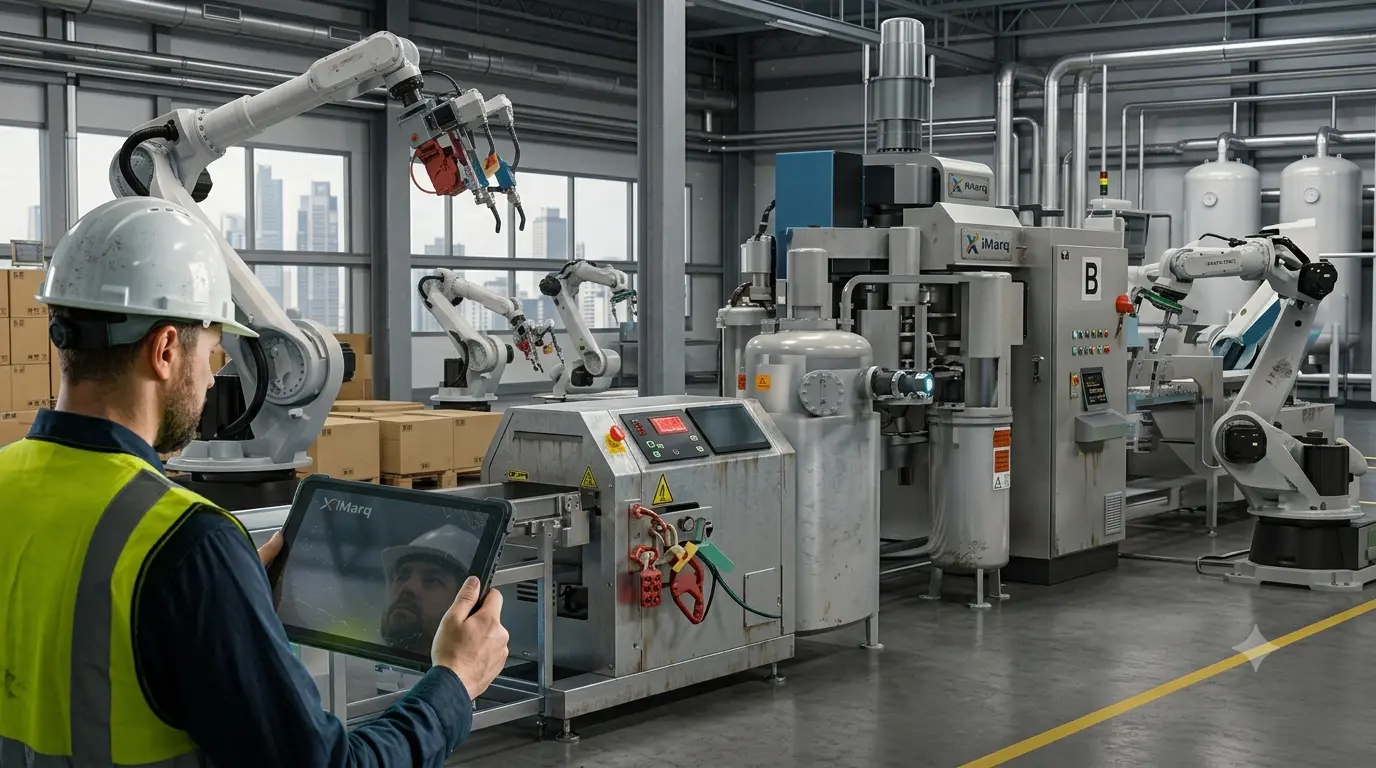
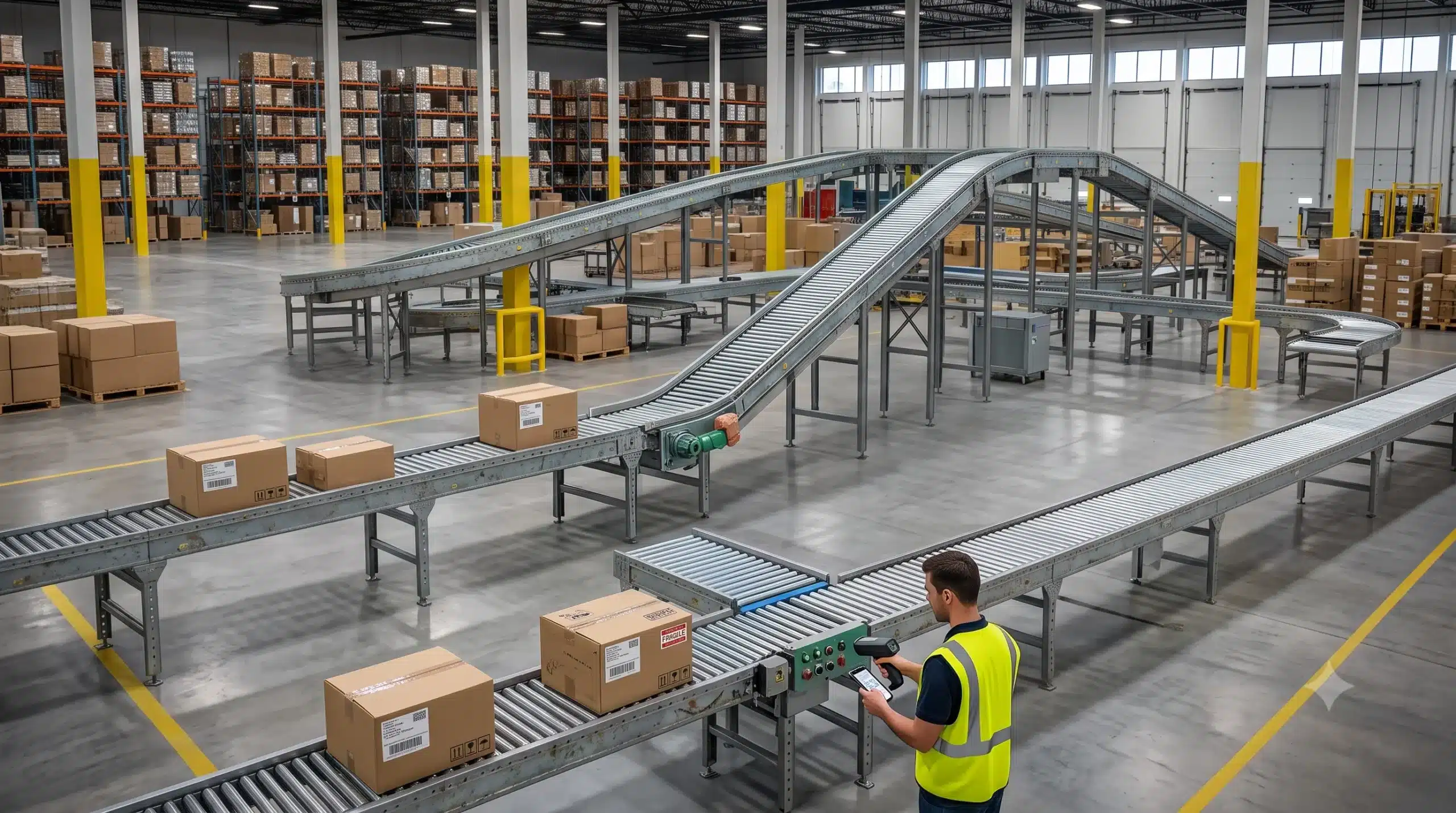
Warehouse operations run on margins measured in minutes. A conveyor stop, a stuck loading dock door, a cold storage unit drifting out of range. None of these are catastrophic on their own. What makes them expensive is how long they go unnoticed and how long it takes the right person to respond.
The numbers back this up. The average facility now loses roughly $108,000 per hour to unplanned downtime, and nearly one in five companies report losses exceeding $100,000 per hour when a critical line goes down. For Fortune Global 500 organizations, the aggregate cost of unplanned downtime reaches an estimated $1.4 trillion annually. Warehouses and distribution centers, where a single conveyor or dock failure can halt an entire fulfillment operation, sit squarely inside that exposure.
Frequency Is Down. Severity Is Up.
The counterintuitive part of the 2026 data is that unplanned events themselves are not necessarily increasing. Many facilities report stable or even fewer unplanned incidents than in prior years. What is rising is the cost per incident, driven by aging equipment and inflation on parts and shipping. In other words, warehouses are not failing more often. They are paying more every time they do.
This changes the calculus for maintenance planning. It is no longer enough to reduce the number of breakdowns. Facilities need to identify which assets carry the highest cost per hour of downtime, whether that is a conveyor system, a forklift fleet, or a cold storage compressor, and build maintenance priority around impact, not just frequency.
The Gap Between Belief and Practice
Nearly every facilities manager agrees that preventive maintenance is the right strategy. Survey data shows that around 90% of facilities managers believe in a preventive-first approach, yet only about a quarter are practicing it consistently. The barriers are structural: insufficient staffing and scheduling conflicts, not a lack of intent. Telling a warehouse team to “do more PM” does not solve a staffing constraint. It requires a system that makes preventive scheduling and execution lighter, not heavier on the team already stretched thin.
A related and often overlooked barrier is documentation. Many warehouses still run maintenance through paper checklists, spreadsheets, or informal radio calls between the floor and the office. That works until the person holding the knowledge is unavailable, at which point institutional memory about which conveyor has a recurring bearing issue, or which dock door sticks in cold weather, disappears with them.
Where iMarq Fits
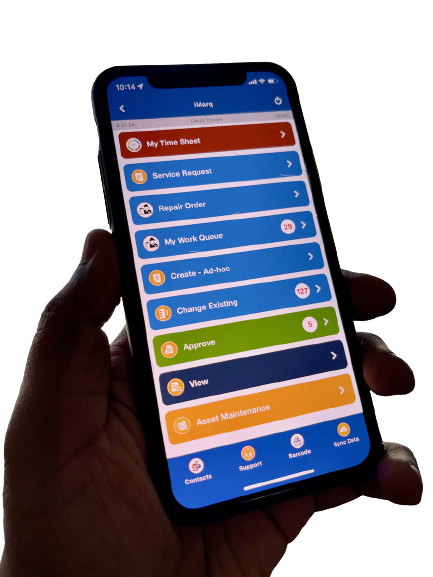
iMarq is built to close both gaps at once. Every asset in the facility, from the roof and lighting to the forklift fleet and automated conveyor systems, lives in one digital record instead of scattered logs. Teams schedule routine inspections and preventive maintenance digitally, and floor staff report issues the moment they happen using the mobile app, with work orders routed instantly to the right technician.
The result is a complete, searchable history for every asset. When a conveyor motor starts showing a repeat pattern, the record is there before the third failure, not discovered after it. That shift, from reactive firefighting to a documented, proactive maintenance rhythm, is what protects fulfillment deadlines and order accuracy at scale.
The Standard Being Set
Warehouses that are pulling ahead in 2026 are not the ones with the newest equipment. They are the ones that have closed the distance between a signal, a stuck door sensor, a fault code, a supervisor’s note, and the technician who acts on it. That distance, measured in minutes, is where fulfillment operations are won or lost.
Request a demo to see how iMarq brings order to warehouse and distribution center maintenance: https://www.connixt.com/try/
References:
- Coast App. (2025, November 7). 30 Key Maintenance Statistics & Facts Highlighting 2026 Trends. Retrieved from https://coastapp.com/blog/maintenance-metrics-statistics-facts/
- Facilities Dive. (2026, February 6). Only 26% of maintenance is preventive: UpKeep survey. Retrieved from https://www.facilitiesdive.com/news/only-26-of-maintenance-is-preventive-upkeep-survey/813208/
- MaintainX. (2025, October 17). 25 Maintenance Stats, Trends, And Insights For 2026. Retrieved from https://www.getmaintainx.com/blog/maintenance-stats-trends-and-insights
- Maintainly. (2026, March 27). Maintenance Stats, Trends & Insights for 2026. Retrieved from https://maintainly.com/articles/maintenance-stats-trends-insights-for-2026