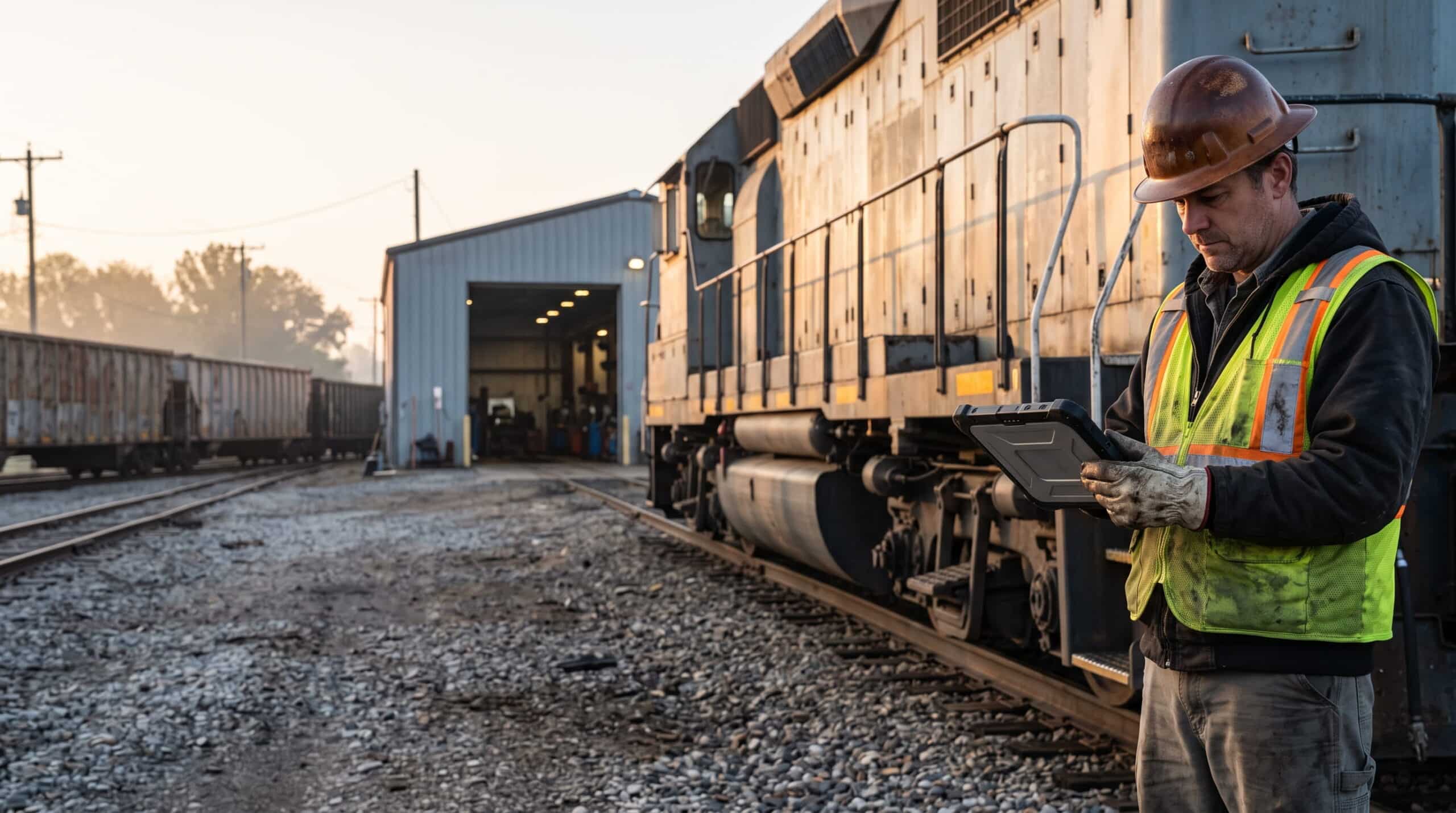
It’s 6:40 on a Monday morning. The lead mechanic at a small short line is already on his second call. A locomotive came in Friday night with a fault, and the crew who brought it in wrote it up on a paper form. That form is somewhere between the cab, the yard office and someone’s truck.
By the time it turns up, the morning is half gone. The parts counter doesn’t know what to pull. The shop doesn’t know whether the unit can go back out today.
None of this happened because the team isn’t good at its job. It happened because the information didn’t move as fast as the people did. For a short line running with a lean crew, that gap is where most of the lost hours hide.
The good news: closing it doesn’t take a bigger team. It takes getting the information that already exists into one place, where everyone can reach it from the yard, the shop or the road.
Where the hours actually go
On a short line, the same few people often handle inspections, repairs, parts and paperwork. When records live on paper or in scattered spreadsheets, a surprising share of the day goes to looking for things rather than fixing them. Here’s where those leaks tend to show up.
The first leak is chasing write-ups. When a crew reports a defect on a paper form, that form has to travel back to the shop, get read by someone who can make out the handwriting, and often get typed into a spreadsheet before anyone can plan the repair. If the form is lost or delayed, the defect sits there. The unit either stays out of service longer than it needs to, or goes back out with a problem nobody has looked at.
The second is entering the same information again and again. A single repair might be written on a form, copied into a spreadsheet, then summarized once more for a monthly report or a customer. Every copy takes time, and every copy is another chance for a number or a date to be mistyped.
Preventive maintenance is the third. When PM due dates live in one person’s head, on a whiteboard, or in a spreadsheet only a few people open, inspections drift. Nobody decides to skip them; the schedule simply isn’t in front of the people who need it. The result is more failures on the road, which are almost always more expensive and disruptive than the planned work would have been.
Parts are the fourth. Many short lines operate across a long stretch of territory with more than one shop or storage location. The part a mechanic needs may well be in stock, just not where he is. Without a shared view of inventory, finding out means phone calls, a drive, or ordering something you already own.
Finally, there’s pulling records when someone asks for them. Whether it’s an inspector, a Class I partner or a shipper, requests for maintenance history tend to arrive at inconvenient moments. When that history is spread across binders and files, putting it together can take a day or more of a supervisor’s time.
Each one only costs a little time. Across a week, and across a small team, they add up to the equivalent of a person you never hired.
What digitizing maintenance really means
Digitizing isn’t about buying a big system and retraining everyone at once. For a short line, it comes down to four practical changes, none of which require replacing how your crews already work.
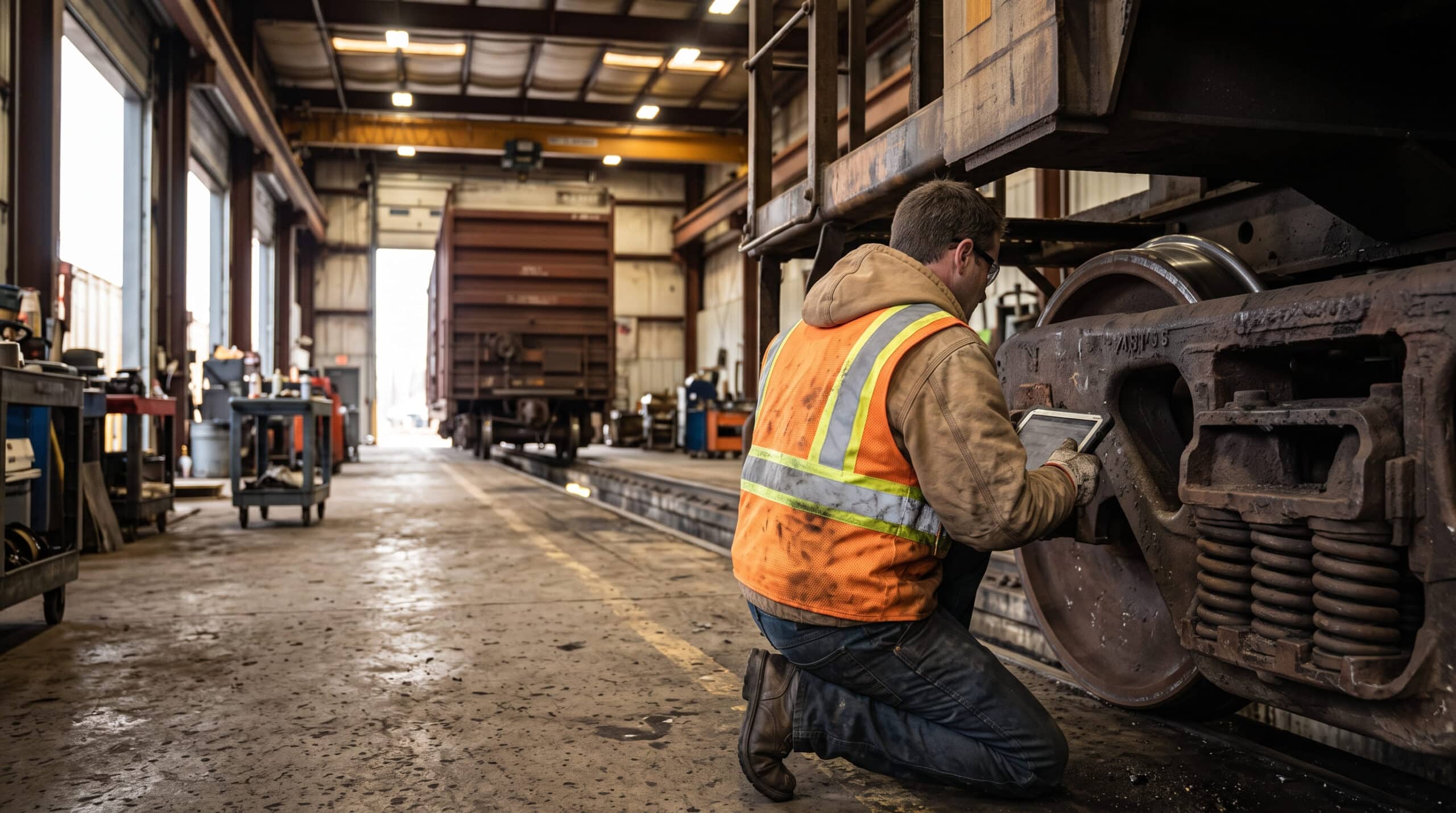
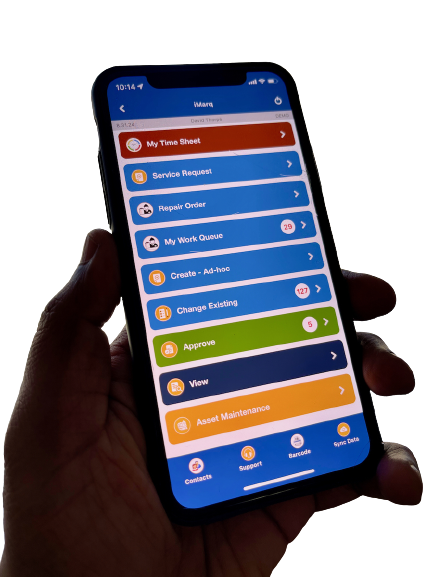
It starts with work orders that live on a phone or tablet instead of paper. A crew member who spots a defect in the yard can log it on the spot, attach a photo, and note the unit and location. That works even without a signal, with the record syncing once they’re back in range. The shop sees it right away, so the repair can be planned before the unit even reaches the building.
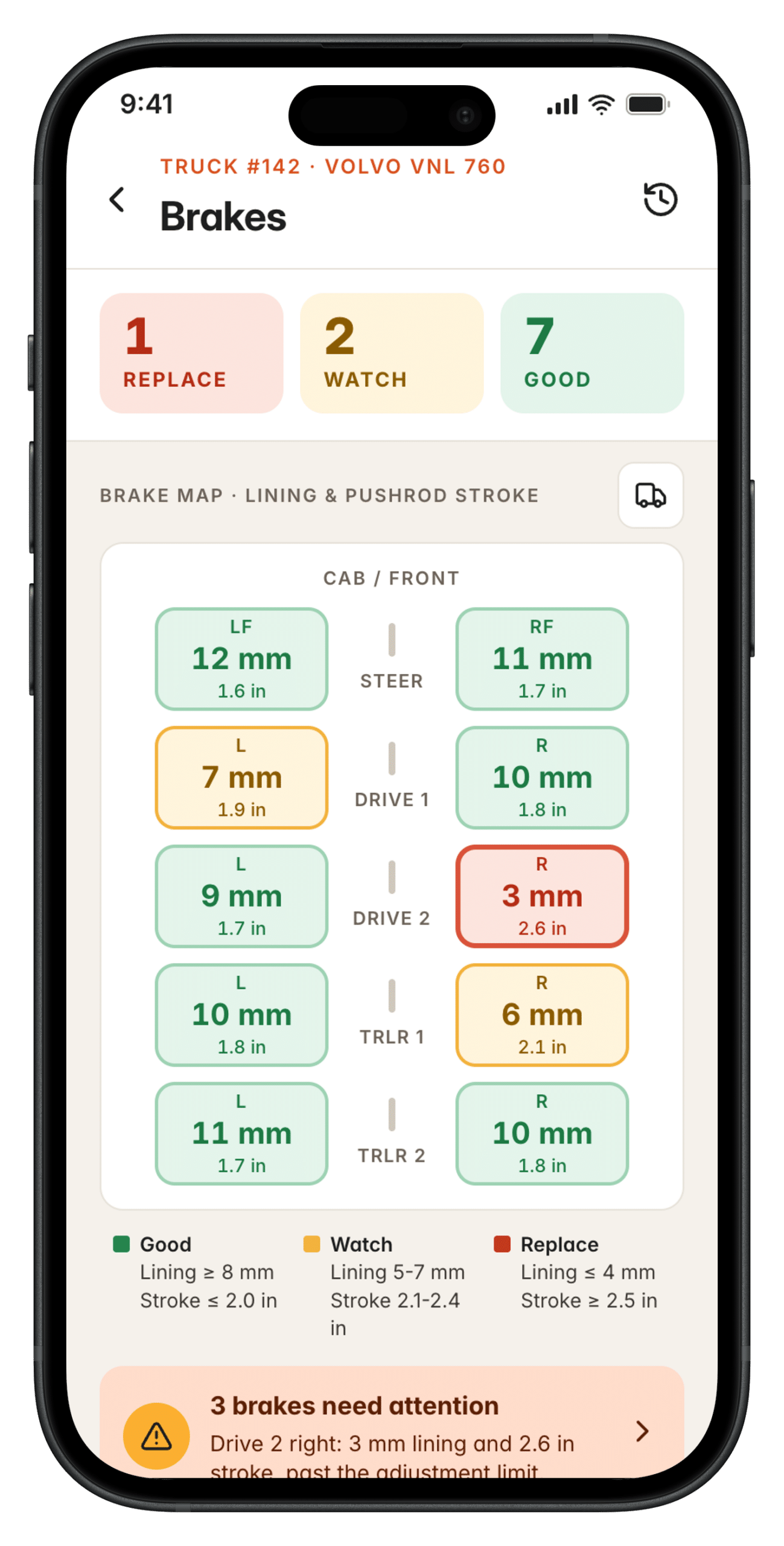
The second piece is a single preventive maintenance schedule that everyone can see. Due dates are tracked by calendar time, mileage or engine hours, and upcoming work is flagged automatically instead of relying on someone to remember. PM stops being a recurring scramble and becomes part of the normal weekly plan.
Third is visibility into parts across every location. When inventory is recorded in the same place as the work, a mechanic can check whether a part is on hand, and where, before starting the job. That saves trips, cuts down on duplicate orders, and makes it easier to keep the right parts in the right places.
The fourth piece is the one teams tend to appreciate most later: records that build themselves. Because every repair, inspection and sign-off is captured as the work happens, the history of each asset grows in the background. When someone asks for it, pulling it together is a quick search, not a project.
A phased way to start
The teams that make this stick usually start small and grow from there.
The most effective first step is to pick a single pain point rather than trying to fix everything at once. For most short lines, that’s either work orders or PM tracking, because that’s where the most time leaks out each week. Solving one problem well builds the confidence and habits that make every step after it easier.
From there, it helps to start with one shop or one fleet. A smaller rollout lets you work out the details, such as which fields crews actually need and how approvals should flow, before asking everyone to change how they work. It also gives you a group of people who can show their colleagues how it works in practice.
You don’t need to start from a blank page, either. Most teams already have asset lists, PM intervals and repair history sitting in spreadsheets, and that information can usually be brought in from day one. Starting with your own data means the system feels familiar and useful right away.
Just as important is letting the crew shape the process. The people in the yard and the shop know which details matter and which ones just slow them down. When they help decide what gets captured, they’re far more likely to use the tool every day, and consistent use is what makes the records worth having.
Once that first step feels routine, expand. Add parts tracking, inspections or reporting one at a time, each building on the data you’ve already collected.
None of these steps needs a new hire. They need a tool simple enough that a busy mechanic will actually use it.
Where AI fits for a short line
Once your maintenance information lives in one place, AI starts to earn its keep, and it doesn’t take a data science team. For a small crew, the most useful AI is the kind that answers everyday questions quickly.
Think about how much time goes into finding the right procedure. OEM manuals can run to hundreds of pages, and a mechanic who needs one specification or troubleshooting step often has to dig for it. AI that searches those documents and returns the relevant section in seconds turns a frustrating hunt into a quick answer.
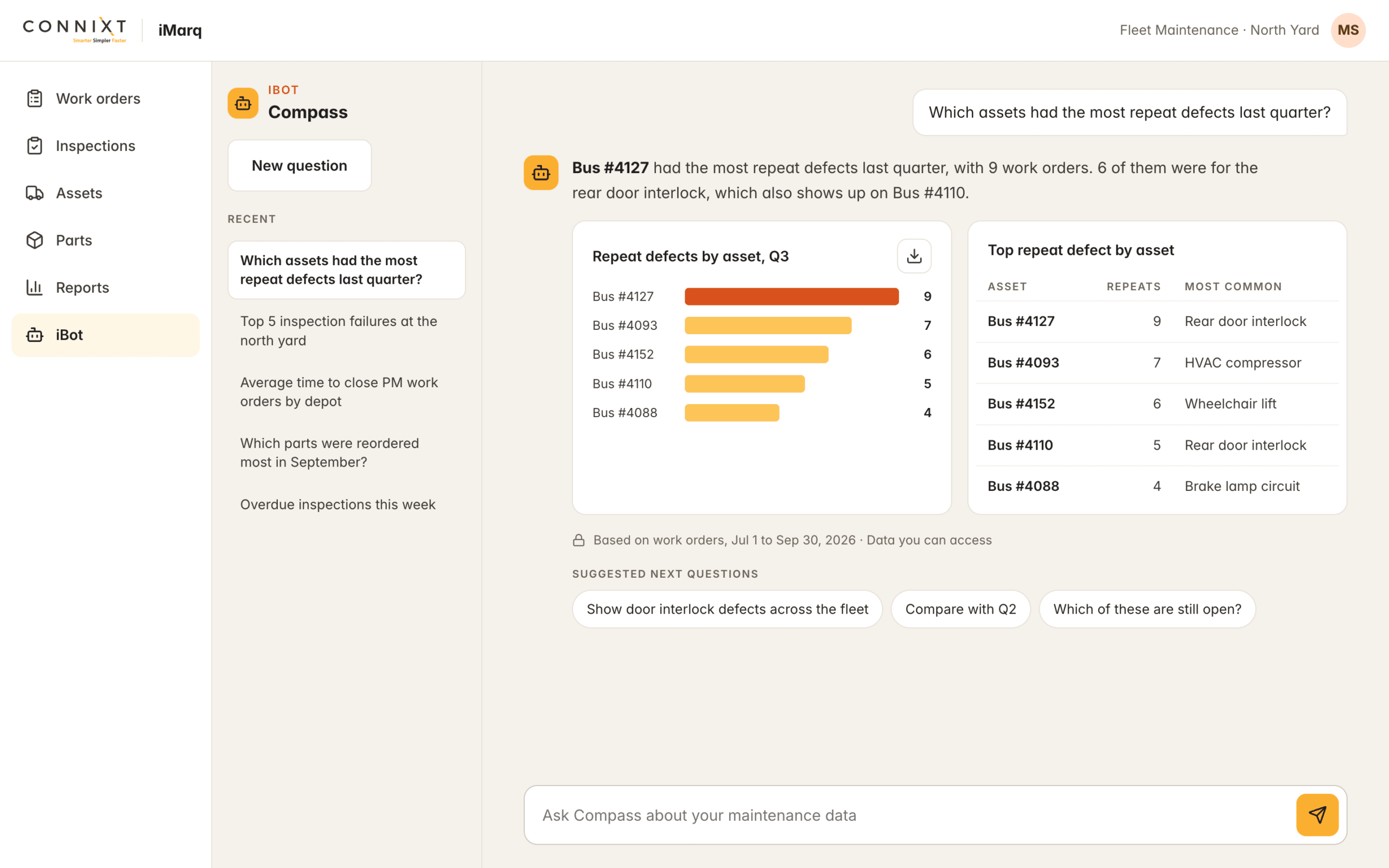
The same goes for questions about the schedule. Instead of filtering a spreadsheet, a supervisor can simply ask which units have preventive maintenance due this week, or which work orders are still open, and get a clear answer in plain language.
AI is also useful for looking back. Before troubleshooting a recurring problem, a mechanic can ask whether the same unit has had a similar issue before and what fixed it last time. Without a shared record, that kind of history often lives only in the memory of whoever happened to work on it.
This matters most when your most experienced people are stretched thin or getting close to retirement. AI won’t replace their judgment. It does make what they know easier for the next person to find.
One honest caveat: AI is only as good as the records behind it. That’s why digitizing comes first.
The bottom line
Short lines don’t need bigger teams to run tighter maintenance. They need the information they already have to move as fast as their crews do. Start with one pain point, get it into one place, and build from there.
Curious what this could look like on your railroad? See how Connixt supports rail maintenance teams at https://www.connixt.com/try/, reach out and we’ll walk you through it.
References:
- American Short Line and Regional Railroad Association (ASLRRA). About ASLRRA. https://www.aslrra.org/about-us/about-aslrra/
- ASLRRA overview presentation to the Railroad Retirement Board (2018). https://rrb.gov/sites/default/files/2018-08/ASLRRA%20Overview%20Presentation%20RRB.pdf
- Stephens, B. (2021). “Train crew shortage spreads to short lines.” Trains. https://www.trains.com/trn/news-reviews/news-wire/train-crew-shortage-spreads-to-short-lines
- Sullivan, G.P., Pugh, R., Melendez, A.P., & Hunt, W.D. (2004, rev. 2010). Operations & Maintenance Best Practices: A Guide to Achieving Operational Efficiency, Release 2.0. PNNL-14788. U.S. Department of Energy, Federal Energy Management Program. https://www.pnnl.gov/main/publications/external/technical_reports/pnnl-14788.pdf
- Rodríguez-Hernández, M., Crespo Márquez, A., & Sánchez Herguedas, A.J. (2025). “Digitalization as an Enabler in Railway Maintenance: A Review from ‘The International Union of Railways Asset Management Framework’ Perspective.” Infrastructures, 10(4), 96. https://doi.org/10.3390/infrastructures10040096
- Gonzalez-Jorge, H., Ríos-Otero, E., Aldao, E., Balvís, E., Veiga-López, F., & Fontenla-Carrera, G. (2025). “Rail Maintenance, Sensor Systems and Digitalization: A Comprehensive Review.” Future Transportation, 5(3), 83. https://doi.org/10.3390/futuretransp5030083
- “Ontology-Integrated Tuning of Large Language Model for Intelligent Maintenance.” CIRP Annals (Elsevier), NSF Award 2237242. https://par.nsf.gov/biblio/10499758
- Politecnico di Milano, LASAR lab. Large Language Models for maintenance engineering (research brief, 2025). https://www.lasar.polimi.it/wp-content/uploads/2025/04/MSc_call_LLMs_maintenance_decision.pdf