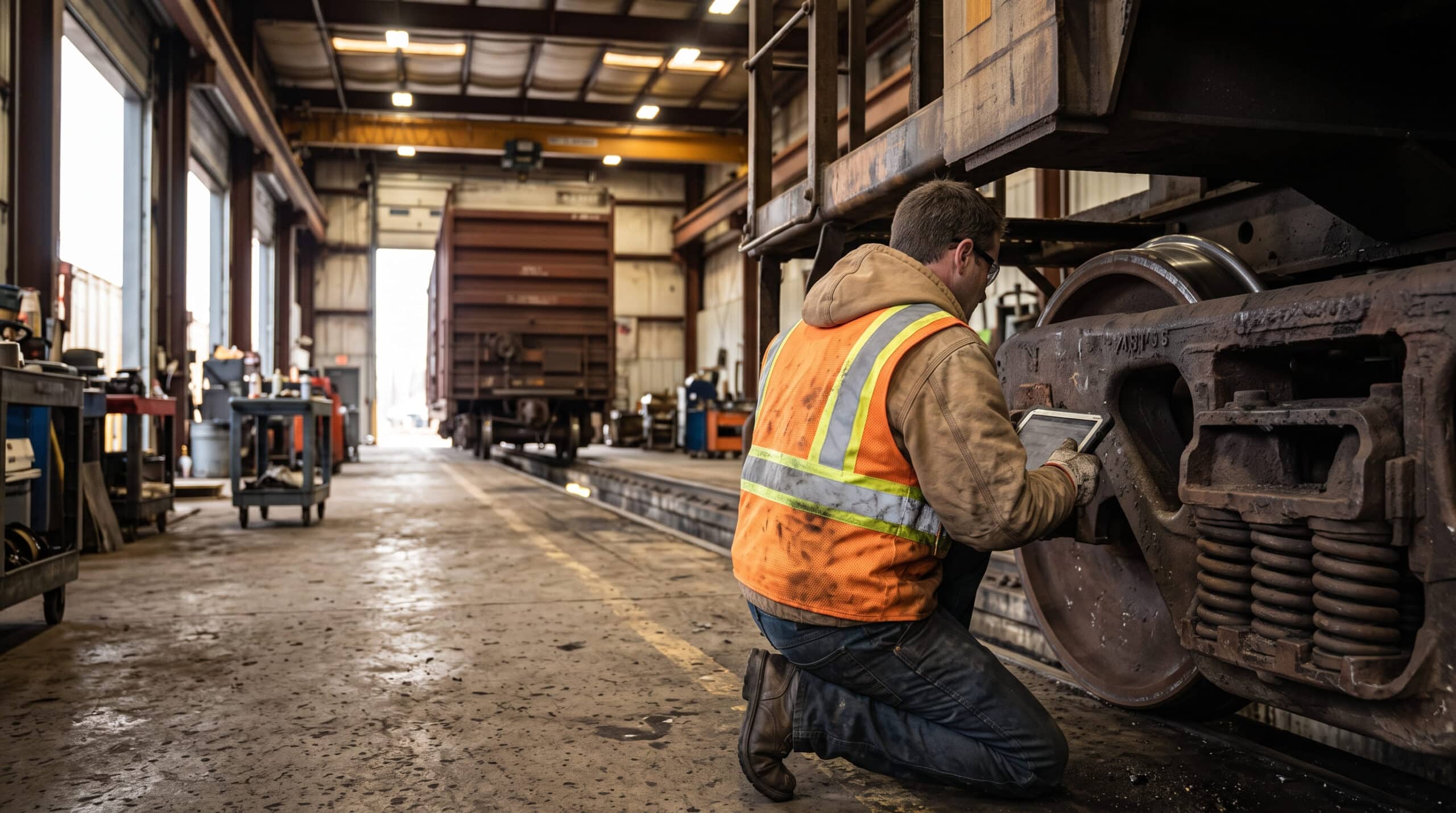
A technician is standing beside a railcar with a brake issue he hasn’t seen in years. The fix is documented somewhere, in a 400-page OEM manual on a shelf in the shop office, or maybe in the notes of a mechanic who retired last spring. He knows the answer exists. He just can’t get to it from where he’s standing.
That moment, repeated across shops and yards every day, is where AI in rail maintenance is earning its place right now. Not in a futuristic control room, and not as a robot that replaces the crew. It shows up as a faster way for maintenance teams to find what they need, see what’s coming and make better calls with the information they already have.
There’s a lot of noise around AI, so it helps to be clear about what it actually looks like on the ground for railroads today, and what it doesn’t.
What it actually looks like
The most immediate use of AI in a rail shop is getting answers out of documents. Maintenance knowledge lives in OEM manuals, procedures, inspection reports and years of repair notes. Most of it is unstructured, long and written in inconsistent language, which is exactly why it’s so hard to use in the moment.¹ AI built for maintenance can search across all of that and return the specific procedure, torque value or troubleshooting step a technician needs, in seconds and right on the mobile device in their hand.
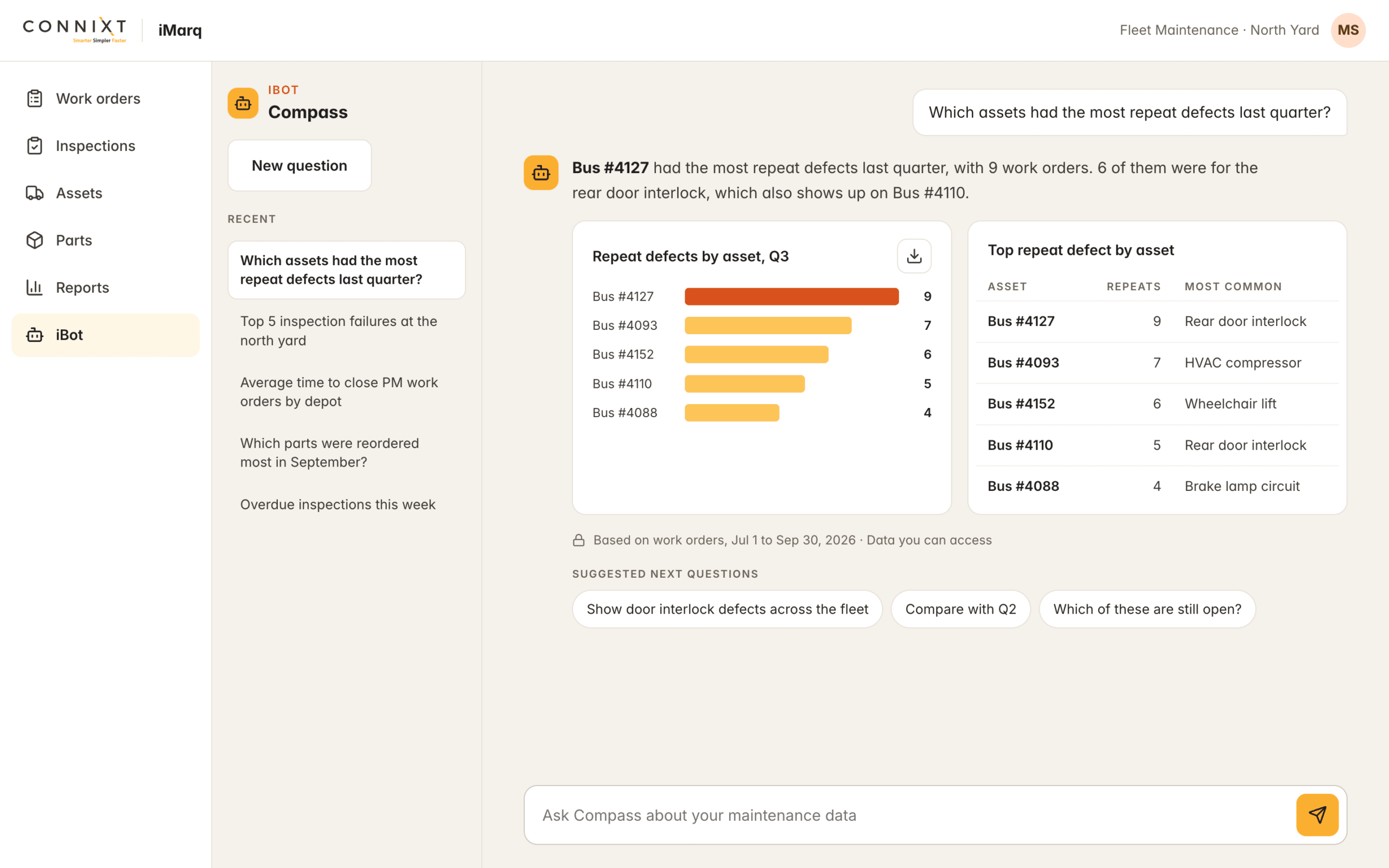
The second use is asking questions of your own maintenance data in plain language. Instead of building a report or filtering a spreadsheet, a supervisor can ask which assets have PMs due this week, which work orders have been open the longest, or which units keep coming back for the same defect. The answer comes from the work orders and inspections the team has already recorded, so it reflects what’s really happening in the yard.
The third is learning from history. When a technician is about to troubleshoot a recurring problem, AI can surface past repairs on the same asset, or on similar ones, and show what fixed it last time. This is where AI starts to protect tribal knowledge. The experience of senior mechanics doesn’t walk out the door with them when it has been captured in the maintenance record and can be found again.
None of these replace the technician’s judgment. They shorten the distance between a question and a reliable answer, which for a maintenance team often means the difference between an asset going back into service today or sitting another shift.
What it doesn’t look like
AI in rail maintenance is not a black box that runs the shop on its own. Railroads operate under strict safety and compliance requirements, and decisions about whether an asset is fit for service still belong to qualified people. The value of AI is in supporting those decisions with better information, not in making them unattended.
It also isn’t a massive, multi-year transformation that has to happen all at once. Research on rail maintenance digitalization points out that the technology has real potential, but that it works best when it’s tied to clear operational goals rather than adopted for its own sake.² For most railroads, that means starting with one practical problem, like finding procedures faster or catching PMs before they slip, and building from there.
And it isn’t something you can bolt onto paper records. This is the part that gets skipped in most AI conversations. An AI assistant can only answer from the information it can reach. If work orders are still on clipboards, inspection history lives in binders and PM schedules sit in one person’s spreadsheet, there’s nothing for the AI to learn from.
What has to come first
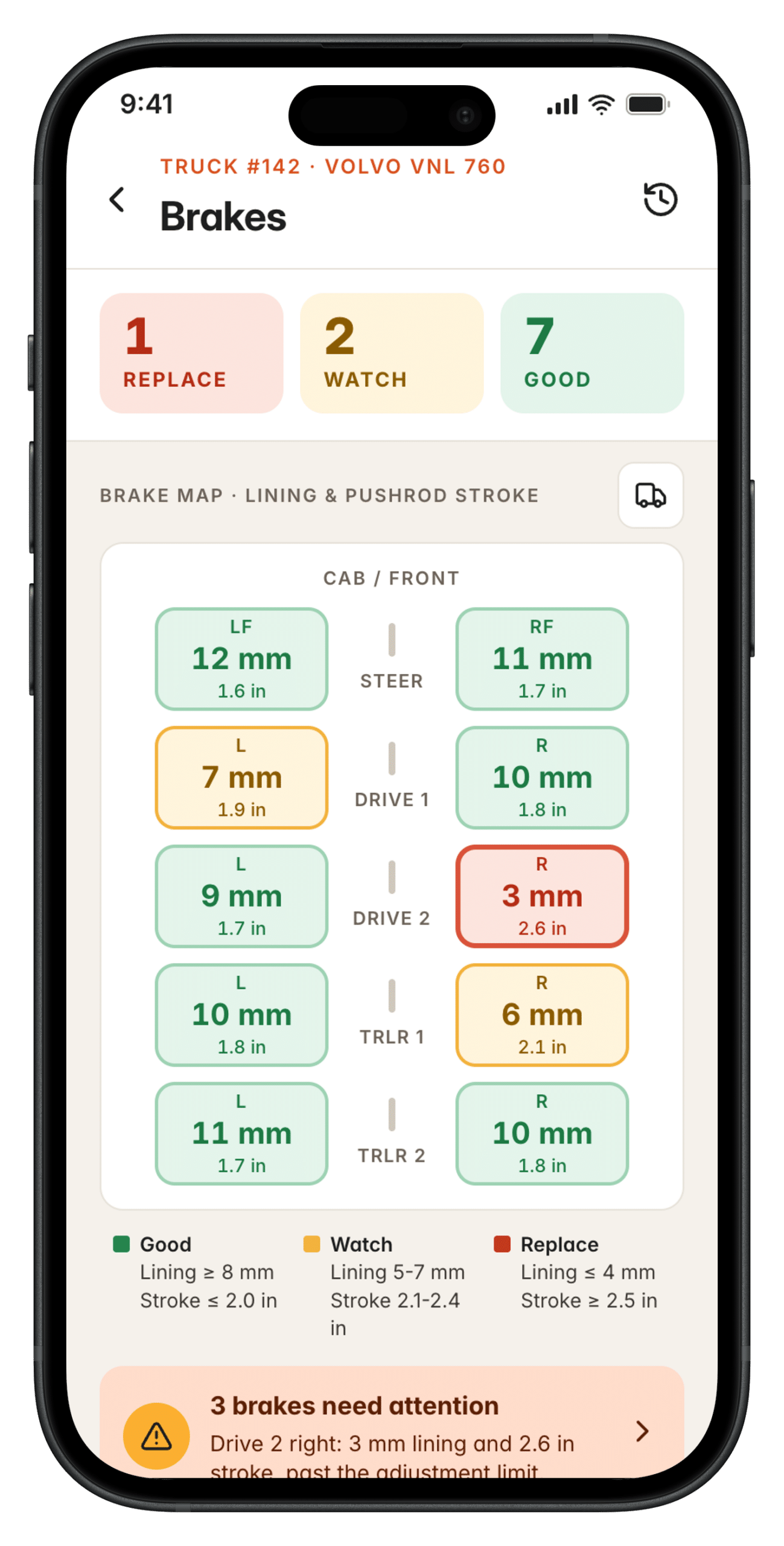
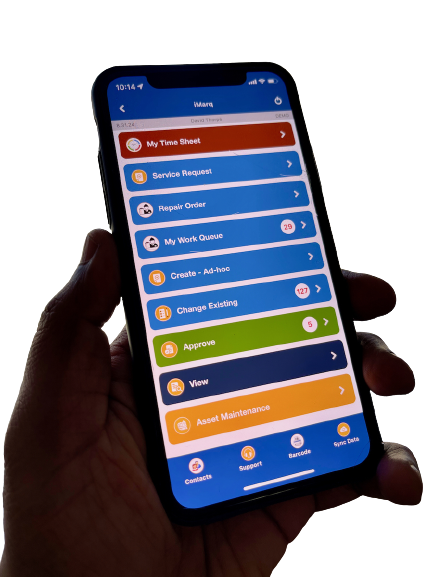
The railroads getting real results from AI started by getting their maintenance data into one place. When work orders, inspections, PM schedules and parts are captured on a mobile-first platform as the work happens, every repair becomes part of a searchable record. That record is what makes smart maintenance possible, and it’s the foundation AI builds on.
The good news is that this foundation pays for itself well before AI enters the picture. Teams that move from reactive to planned maintenance typically see lower maintenance costs and fewer unplanned failures,³ and the same digital records that make planning possible are the ones that make AI useful later.
The bottom line
AI in rail maintenance is less dramatic than the headlines suggest, and more useful. It helps technicians find answers faster, helps supervisors see what’s coming, and helps railroads hold on to knowledge that would otherwise retire with their most experienced people. But it only works when the maintenance data behind it is complete, current and in one place.
If you’re wondering where your team would start, take a look at how Connixt supports rail maintenance teams at https://www.connixt.com/try/, and we’d be glad to walk you through it.
References:
- Politecnico di Milano, LASAR Lab (2025). Large Language Models for maintenance engineering with applications to energy systems. Link
- Rodríguez-Hernández, M., Crespo Márquez, A., and Sánchez Herguedas, A.J. (2025). “Digitalization as an Enabler in Railway Maintenance: A Review from ‘The International Union of Railways Asset Management Framework’ Perspective.” Infrastructures, 10(4), 96. doi.org/10.3390/infrastructures10040096
- Sullivan, G.P., Pugh, R., Melendez, A.P., and Hunt, W.D. (2004, rev. 2010). Operations and Maintenance Best Practices: A Guide to Achieving Operational Efficiency, Release 2.0. U.S. Department of Energy, Federal Energy Management Program. PNNL-14788