Rail operators have long recognized the value of preventive maintenance. Regular inspections and scheduled repairs have helped reduce failures and maintain uptime. But as rail networks expand and demand increases, the limitations of time-based or usage-based maintenance become more apparent. In 2025, the industry is finally crossing a critical threshold—moving beyond connectivity to unlock the true value of predictive maintenance using AI and IoT.
The technologies themselves are not new. Rail operators have been outfitting assets with sensors and deploying mobile inspection tools for years. What’s changed is the level of maturity and integration of these technologies—especially cloud-native mobile platforms, real-time data analytics, and machine learning. This convergence is shifting the focus from “connected assets” to “actionable insights.”
From Data Collection to Decision Support
Historically, IoT deployments in rail have focused on monitoring. Vibration sensors detect abnormal patterns. Temperature gauges alert crews to overheating components. Mobile apps enable field teams to log inspections digitally. But these are just building blocks.
The real opportunity lies in transforming this flood of data into a decision support system. AI models trained on historical asset data can now identify failure patterns, calculate risk scores, and recommend proactive interventions—well before a visible fault emerges. Predictive maintenance moves the paradigm from responding to symptoms to preventing the illness altogether.
For instance, consider wheelset maintenance. Traditionally inspected at fixed intervals, wheels are subject to wear that varies based on load, speed, terrain, and even weather. By combining IoT data from onboard sensors with historical maintenance records and real-time operating conditions, AI models can predict when a specific wheelset will need servicing. This enables targeted maintenance—reducing costs, avoiding unnecessary downtime, and improving safety.
The Infrastructure Challenge
Despite the promise of AI-driven maintenance, most rail operators still struggle with data fragmentation. Legacy systems, siloed departments, and outdated field processes limit the value that can be extracted from IoT and AI initiatives.
According to the U.S. Federal Railroad Administration, nearly 60% of Class I railroads cite “integration with existing IT infrastructure” as a barrier to predictive maintenance adoption. [FRA Report, 2024]
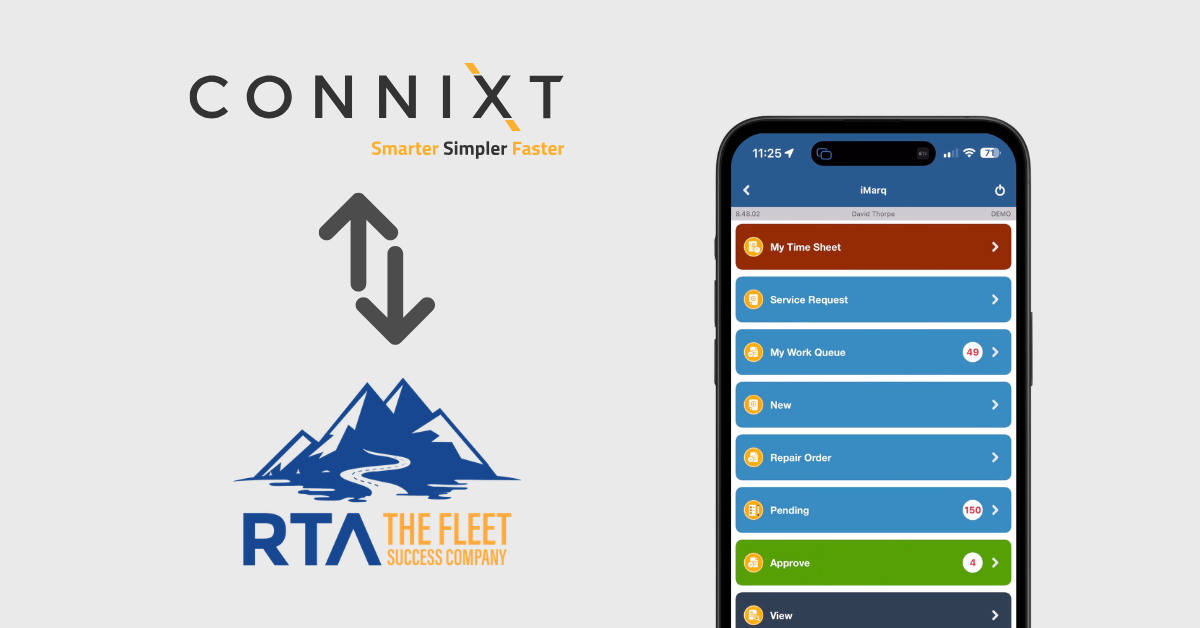
This is where mobile-first, cloud-native platforms like Connixt make a critical difference. By enabling seamless data capture from the field—across inspections, repairs, and condition monitoring—without the need for coding or complex integrations, these platforms serve as the connective tissue between field operations and enterprise systems.
Just as importantly, they democratize access to insights. Maintenance crews, inspectors, and operations managers can act on predictive alerts without needing to be data scientists. The AI engine works in the background—surfacing relevant tasks and thresholds directly within mobile workflows.
From Pilot Projects to Scalable Impact
In the past, many predictive maintenance efforts were limited to pilot programs. Operators tested AI on a few locomotives or deployed IoT sensors in one yard. The challenge was scale—how to move from proof-of-concept to fleet-wide implementation.
In 2025, that’s changing. Advances in edge computing and cloud infrastructure now make it feasible to process large volumes of sensor data in near real time. More importantly, regulatory bodies and public transportation agencies are beginning to support and even mandate the adoption of digital maintenance practices.
For example, the European Union’s ERA (European Union Agency for Railways) is developing updated asset management frameworks that emphasize condition-based monitoring. Likewise, the U.S. Department of Transportation is funding research into AI-assisted rail inspections to improve safety and reduce manual workload. [U.S. DOT Research Hub, 2024]
These developments are creating the push and pull needed to move predictive maintenance from innovation labs into day-to-day operations.
The Human Factor: Empowering, Not Replacing
There’s a common misconception that AI in maintenance means replacing human expertise. In reality, the opposite is true. Predictive systems enhance the technician’s role—giving them better tools, timely alerts, and contextual information.
The insights generated by AI must still be validated in the field. And it is the hands-on experience of inspectors and mechanics that helps refine AI models. The most successful deployments are those where technology supports—not supplants—human judgment.
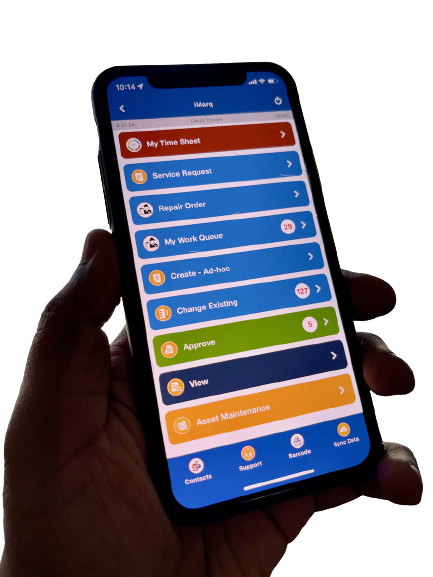
With mobile-first solutions like Connixt iMarq, field crews can receive real-time notifications, upload annotated images, and feed back their observations directly into the system—creating a virtuous loop between machine intelligence and human insight.
Looking Ahead: Maintenance as a Strategic Lever
In 2025, rail operators are no longer treating maintenance as a cost center. With AI and IoT driving predictive strategies, maintenance is becoming a strategic lever—improving asset utilization, extending equipment life, and enhancing passenger and freight reliability.
The path forward demands more than just sensors and dashboards. It requires a cohesive approach to data, processes, and people. Platforms that integrate mobility, cloud, and AI are no longer optional—they’re foundational to the future of rail.
As we move beyond connectivity, the question is no longer whether predictive maintenance is possible—but how quickly rail organizations can embrace it at scale. The ones that do will define the next era of operational excellence in the rail industry.
⸻
For more on how mobile-first platforms are shaping rail maintenance, visit us here.
References
FRA Quad Charts (FY25)
U.S. DOT ARPA‑I RFI on AI in Infrastructure
FHWA-HRT-24-055: Employing Artificial Intelligence to Enhance Infrastructure Inspections (Jul 2024)
Opportunities and Challenges of AI in Transportation RFI (May 2024)
An Edge AI System Based on FPGA Platform for Railway Fault Detection (Aug 2024)
AI‑Driven Road Maintenance Inspection