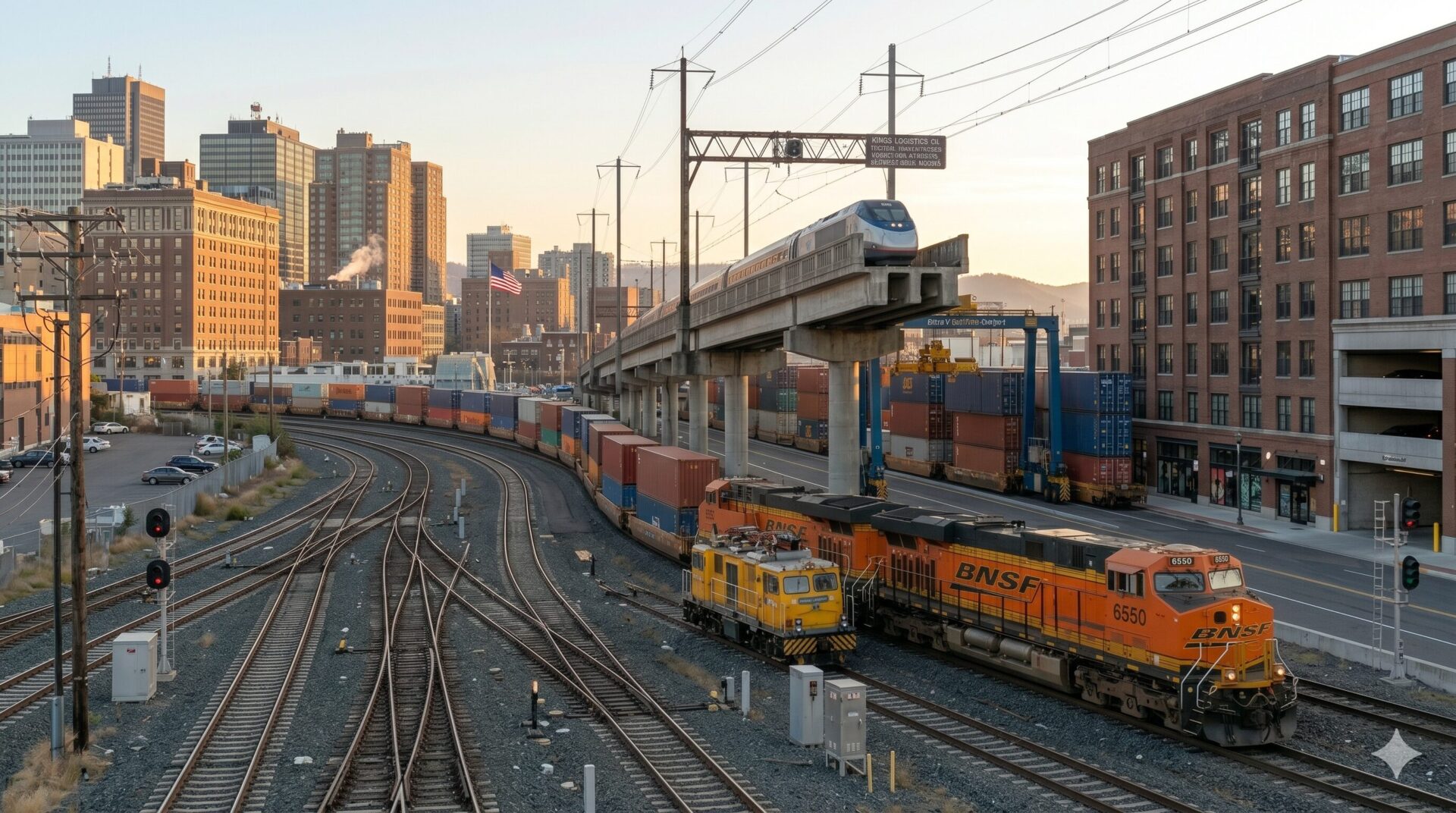

For fleet managers and shop owners in the trucking, railroad, and heavy equipment sectors, the economic landscape of 2025 has presented a challenging “double whammy.” While business demand remains robust for a majority of shops, the cost of keeping those wheels turning is climbing at an unsustainable rate.
Recent industry data reveals a stark reality: shop labor rates have surged 10% year-over-year, now averaging roughly $149 an hour. This spike isn’t just a line item on a budget; it is a symptom of a deeper structural crisis. With the Bureau of Labor Statistics (BLS) and organizations like the American Transportation Research Institute (ATRI) highlighting a persistent 19% vacancy rate in technician roles, the industry is caught in a cycle of paying more for less available talent.
To survive this “productivity paradox,” maintenance leaders must move beyond the traditional reactive model. The solution lies in a smart maintenance platform—an intelligent ecosystem that doesn’t just track work orders but actively optimizes every facet of the shop.
The True Cost of the Status Quo
Rising labor costs are often viewed as a simple wage issue, but the hidden drain is efficiency. When a shop is understaffed, the remaining technicians are often bogged down by “administrative drag”—manually searching for parts, deciphering paper-based inspection logs, or performing redundant diagnostic steps.
Furthermore, the “talent gap” is expensive. ATRI research indicates that nearly 62% of new technicians enter the field without formal training, requiring an average of 357 hours of employer-led instruction to become fully productive. When your labor rate is $149/hour, every hour a master technician spends babysitting a trainee or hunting for a service manual is a massive financial leak.
Turning Intelligence into Efficiency
A smart maintenance platform leverages Artificial Intelligence (AI) to act as a “force multiplier” for your existing crew. Here is how intelligence combats the labor crisis:
1. Eliminating the “Diagnostic Guesswork”
AI-driven predictive maintenance moves the shop from reactive “firefighting” to surgical precision. By analyzing telematics and sensor data, the platform can predict a failure before the vehicle even hits the bay. This allows the shop to pre-order parts and assign the right technician with a pre-populated digital work order. Research indicates that organizations implementing AI-driven predictive models can achieve a 25–40% reduction in total maintenance costs.
2. Digitizing Tribal Knowledge
The technician shortage is worsened by the “silver tsunami”—the retirement of experienced veterans. A smart platform captures this “tribal knowledge” within a digital database. When a junior tech encounters a complex hydraulic issue on a locomotive or a piece of heavy equipment, the platform uses AI to suggest the most likely fix based on historical data and OEM guidelines. This reduces the “Mean Time to Repair” (MTTR) and allows less-experienced staff to perform at a higher level.
3. Total Shop Visibility
True smart maintenance covers more than just the engine; it covers the shop floor. By integrating inventory management, bay scheduling, and labor tracking into a single pane of glass, managers can identify bottlenecks in real-time. If a $150-an-hour technician is waiting thirty minutes for a gasket, the system flags the inventory failure, allowing for process corrections that prevent future idle time.
The Path Forward: Resilience Through Tech
In a market where 61% of shops are reporting better business but struggling with a 16.5% turnover rate, the competitive advantage belongs to those who digitize.
A smart maintenance platform isn’t about replacing the human element; it’s about protecting it. By automating the mundane and optimizing the complex, you reduce the “burnout” that drives a large percentage of diesel technicians to consider leaving the industry. You transform the shop into a high-tech environment that attracts the next generation of digital-native talent.
The math is simple: you cannot control the national labor rate, but you can control how many of those hours are spent on high-value wrench time versus low-value administrative waste.
References:
- U.S. Bureau of Labor Statistics: Occupational Outlook Handbook: Diesel Service Technicians and Mechanics.https://www.bls.gov/ooh/installation-maintenance-and-repair/diesel-service-technicians-and-mechanics.htm
- American Transportation Research Institute (ATRI): Addressing the Shortage of Qualified Diesel Technicians.https://truckingresearch.org/2025/08/new-atri-research-addresses-shortage-of-qualified-diesel-techs-in-trucking/
- U.S. Bureau of Labor Statistics: Employment Cost Index – December 2025.https://www.bls.gov/opub/ted/2026/compensation-costs-up-3-4-percent-from-december-2024-to-december-2025.htm
- TruckNews: 2025-2026 State of Heavy-Duty Repair: https://www.trucknews.com/business-management/2025-2026-state-of-heavy-duty-repair/1003212359/
- Heavy Duty Journal: Diesel Mechanic Shortage: Complete 2025 Workforce Crisis Guide. https://heavydutyjournal.com/diesel-mechanic-shortage-impact-labor-market-trends-and-workforce-solutions/